Blog

Varg Freeborn’s Helpful Mission Concept

I discussed Varg Freeborn’s concept of a mission, which he outlines in the book Violence of the Mind. I want to expand on it briefly here with a Storytime concerning your mission and being armed.

Storytime

Your mission as a father is to protect your daughter, who is all of twelve years old while allowing you both to live authentic, meaningful lives. You have planned a night out; she wants to go to a popular restaurant. You check in at the front, survey the place and ask to be seated in a particular portion of the restaurant that is very close to an emergency exit. If any trouble happens, you can grab your daughter and quickly exit the establishment. You and your daughter are having a lovely time when someone comes into the restaurant and starts shooting.

#

Let’s cover a few scenarios:

Storytime Scenario 1

You are unarmed. You grab your daughter and dash out the emergency exit.

Storytime Scenario 2

You are armed with a less-than-lethal weapon. You grab your daughter and dash out the emergency exit.

Storytime Scenario 3

You are armed with a firearm. You grab your daughter, push her to the floor, and begin to fire at the active shooter.

Compare Scenario 3 with Scenarios 1 and 2. Did you make the right decision regarding your mission? Your mission was not to protect the public. It was to protect your daughter. Did your decision place your daughter in a safer situation or a more dangerous one? In Scenario 3, your actions put you and your daughter in this new situation:

• The active shooter’s attention is now directed at you.

• If the active shooter had planned this attack, they might be wearing body armor. If so, your bullets may not bring them down even if they find their mark.

• Should you seek cover in a restaurant, an inch of drywall and 2×4 studs spaced 16 inches apart do not provide reasonable protection against bullets.

Storytime Scenario 4

You are armed with a pistol. You grab your daughter and dash out the emergency exit. As soon as you are at a safe location, you call 911.

If fulfilling your mission means running even though you are armed, that is what you should do. Many people who CCF do not think these scenarios through fully. That is why Freeborn’s mission concept is so helpful.

The Dice Game

I quote from Varg Freeborn’s book Violence of the Mind in my book. One of my favorite concepts from his book is his mission concept. I try to put it to good use. Understanding what your mission is when carrying a firearm, what situations you are going to get involved in, and, importantly, what situations you are not going to get involved in is crucial to the success of your mission. I want to take another opportunity to look at Freeborn’s mission concept. This time I’ll be looking at it from a threat perspective. Essentially, the question is: what threat are you up against that could compromise the success of your mission?

Most people assume that the threat is a stranger who is an armed violent criminal. For a change, let’s go ahead and assume that is true. Another true thing is that there are many ways to be armed. Let’s look at a few (I’ll explain the bracketed numbers in a bit):

[1] rifle

[2] ar15 carbine

[3] ar15 pistol

[4] shotgun

[5] full-size pistol

[6] compact pistol

Other things besides firearms can be a factor:

[1] body armor

[2] lots of ammo

[3] night IR vision

[4] thermal vision

[5] optics

[6] light/laser

Of course, that’s only half the equation. Let’s look at the circumstances:

[1] morning

[2] midday

[3] afternoon

[4] early evening

[5] midnight

[6] early morning

And who you are with at this time:

[1] alone

[2] with your friends

[3] with your lover

[4] with your lover and child

[5] with your child

[6] with your parents

Okay, let’s play a game. Get some six-sided dice, take one die, and roll it for each section. You’ll develop a violent criminal threat scenario at the end of the process. For example, I’m up against a guy with a shotgun, with lots of ammo, in the early evening, and I’m with my friends. How does your Every Day Carry (EDC) stack up against this violent criminal threat?

I suspect, if your EDC is anything like mine, it doesn’t stack up well. Combining a mission (i.e., protect your family) with a well-armed threat is very disheartening for an ordinary civilian. Lucky for us, most criminals have the following characteristics:

a. They want an easy victim

b. They don’t want to get caught

c. They don’t want to get shot

d. For Common Violent Crimes (CVCs – everything violent except murder), criminals rarely use firearms when the victim is injured.

So far, so good as our EDC provides a good defense against these characteristics. However, the point of this post is to show that it doesn’t take much change for a violent criminal to have even more of an advantage over an ordinary civilian, even when the ordinary civilian is carrying.  In fact, in the last two years, some rather disturbing things have happened:

  • Law enforcement has been ordered to stand down during violent riots
  • Many participants in these riots who committed illegal acts were not arrested
  • Some participants that were arrested were also released on bail quickly
  • For those that were out on bail, criminal charges were later dropped (sometimes much later after publicity died down)
  • Self-defense acts against the illegal actions of participants have been aggressively prosecuted against the civilian claiming self-defense
  • Evidence destruction (e.g., destroying a witness’ cell phone)
  • Witness intimidation
  • Jury intimidation

If these changes become the new normal, violent criminals will no longer be deterred by getting caught or worrying about going to jail. They will only worry about getting shot. These changes could easily lead to well-armed violent criminals willing to shoot first. This possible behavior change is a disaster for ordinary civilians, as I hope the dice game revealed. Here is what you can do:

  • Move out of states that allow/enable the behaviors detailed previously
  • Move to states that (a) have strong gun rights, (b) have strong self-defense laws, and (c) have one-party consent to audio and video recording. Lastly, if you find states with all three things, look for one that does not have mandatory sentencing for gun crimes. In general, a state should have incentives that increase the likelihood of a fair jury trial rather than increase the likelihood of a plea bargain. Ordinary civilians who believe they are innocent should not be punished for exercising our Sixth Amendment rights, which mandatory prison sentences do by making a jury trial too risky.
  • Get an attorney on retainer and discuss your various self-defense options. For example, can you carry a concealed body camera for audio/video recording that you selectively enable at certain times?

The Influence of Fiction

I grew up in rural Arizona. My dad and his brother ran a farm at about 500 acres, which I worked on in my youth. My dad’s dad (Grandpa Olsen) ran a small cattle ranch, which I also helped out on in my youth. In addition, his dad (Great-Grandpa Olsen) ran a freighter between two smaller Arizona towns. My father had detailed historical knowledge of Arizona and probably could have given many historians a run for their money. Needless to say, I was steeped in the Old West. I practiced fast draw, handloaded my ammunition, read Louis L’Amour daily, watched documentaries on various Old West characters, watched westerns all the time, and so forth.

One day, as I got older, I realized that everything I thought I knew about the American West was fictional. What I “knew” about the Old West were the creative ideas of screenwriters and fiction writers. Most of my “knowledge” wasn’t historically accurate. For those who are now wondering about their Old West knowledge, please read Thomas J. DiLorenzo’s article in the Fall 2010 issue of the Independent Review. It is a bit disconcerting. 

I never really got over that blow when I realized that my “knowledge,” hobbies, and viewpoints were fiction. It negatively impacts many things that I would otherwise enjoy. I worry that I’ll be a victim of confusing fiction with genuine knowledge once again. While knowledge about the Old West may be inconsequential, consider something similar:

What if you were innocent of a crime but were being tried based on DNA evidence? Who would you want to serve on the jury? Someone who has never missed an episode of CSI or had basic valid scientific knowledge of DNA evidence and how it could be used and misused for criminal investigations?

Likely, you would get someone either unfamiliar with DNA evidence or someone who had never missed an episode of CSI, NCIS, and so forth. Sadly, what is presented in those shows is quite, well, fictional. You would probably want to recommend the jury read the book Inside the Cell: The Dark Side of Forensic DNA, by Erin E Murphy, for an excellent place to start on learning about forensic DNA evidence and counteracting some of the jury’s fictional “knowledge.”

From a self-defense point of view, the series Law & Order, and more recently Bull,  probably has left an impression on many Americans about their justice system. But, sadly, it too is about entertainment and doesn’t reflect real life. Here is why:

“While there are no exact estimates of the proportion of cases that are resolved through plea bargaining, scholars estimate that about 90 to 95 percent of both federal and state court cases are resolved through this process (Bureau of Justice Statistics, 2005; Flanagan and Maguire, 1990).”

Could you imagine watching a television series about jury trials where 90-95% of the episodes ended in immediate plea bargains? It probably wouldn’t fit under the “Entertainment” category, but perhaps under the “Help for the Insomniac” category. But, unfortunately, that was the shot, and here is the chaser:

“Overall, the majority of evidence illustrates that those who accept a plea are likely to receive a lighter sentence compared with those who opt for a trial. This disparity exists because prosecutors are granted wide discretion when reducing charges. These findings are problematic because they demonstrate that if a defendant opts to invoke the Sixth Amendment right to a trial by jury, he or she will likely have a more unfavorable outcome.” (ibid).

Prosecutors have broad discretion in reducing charges. This discretion allows them to punish people that they don’t favor (no plea bargain, substantial charges) and reward people they prefer (with significantly reduced charges and a plea deal). For example, imagine a prosecutor who believed that people did not have the right to kill in self-defense. Also, imagine that the same prosecutor had a significant amount of sympathy for those who commit violent crimes. It is clear how justice could be compromised just by one person in a position of power through pressure and plea bargains. Worse, these same prosecutors could be influenced to engage in this behavior by other groups or prominent individuals. For example, listen to the Human Events podcast discussing the events that led to the suicide of Jake Gardner.             

Plea bargains and broad discretion on charges for prosecutors may undermine justice, but don’t forget that “tough on crime” legislation, such as mandatory prison sentences, also drives plea bargains. In Arizona, a negligent firearm discharge in a municipality is a class 6 felony and carries a mandatory prison sentence. There would be considerable risk in a concealed carrier having a negligent discharge and asking for a jury trial. If the jury finds the concealed carrier guilty, they will go to prison. There is nothing the judge can do to stop it, no matter the circumstances. While the argument can be made that criminal law is much more efficient due to plea bargains, we should not forget that trial by jury is an essential protection of our freedom. Our Founders certainly thought so.

Heart in the Fight

How much firearm training does an ordinary civilian need? Ask ten instructors, and you’ll probably get ten different answers. Some of them might even say, “You can never get enough training,” yet military boot camps and police academies seem to have figured out the right amount. 

One way to determine how much training we need is to look at our enemy’s skills. Let’s hear from Adam Plantinga, author of the book 400 Things Cops Know: Street-Smart Lessons from a Veteran Patrolman: “Most bad guys can’t shoot for spit. They’re about as accurate as the stormtroopers in Star Wars. … But there are notable exceptions to this. Some felons, especially gang members, do practice. Some have military experience. … They are the reason we have SWAT teams.”

Plantinga’s observation is that marksmanship, for the most part, is not part of our enemy’s skill set. This observation conflicts with most firearm training classes. Firearms training for concealed carry is very keen on making you a better pistol marksman. You can spend thousands of dollars and untold hours on learning to shoot in low-light conditions, shooting from behind vehicles, sweeping your house, and so forth. However, I would wager that an ordinary civilian who has had a couple of quality firearm training classes and shoots a hundred pistol rounds a month at the local gun range is a far better shot than most violent criminals.

What follows from these observations? It would seem that firearm skill is not the same as violence skill. The next logical question is: what does it mean to say you have violence skill? To make sense of this question, we can make some distinctions. First, let’s distinguish between actualized violence and potential violence. We can further differentiate between experienced/inexperienced and trained/untrained. Here are the players that map to these distinctions, starting with the most dangerous:

Actualized-violence-experienced-trained: veteran law enforcement officer, military combat veteran, a violent criminal with military training.

Actualized-violence-experienced-untrained: veteran violent criminal. Although not formally trained, it would be a mistake to underestimate this man. What he knows works.

Actualized-violence-inexperienced: anyone with the proven ability to impose their will on someone else by brutalizing them. They just haven’t done it enough to be considered experienced at it. They may or not be trained on the techniques of violence.

Potential-violence-trained: rookie law enforcement officer’s first day, green military private being deployed to combat, self-defense trainees who have completed many quality courses.  

Potential-violence-untrained: most ordinary civilians

It may be tempting to assume that these five categories are separated only by degrees. In doing so, someone may argue that “potential-violence-trained” should be higher up the list. After all, they are competent in the tools and techniques to be effective if a violent situation occurs. I would argue differently: the difference between potential and actualized is separated by one of kind and not degree. Potential and actualized are like voltage and amperage, respectively. Your various traits, personality, character, and body chemistry are like the conductor that transforms voltage into amperage, or in other words, the potential into the actual.

As in the case of lightning in a thunderstorm, the potential is there, but there is no lighting until the air becomes a conductor and allows the flow of electricity. This conductor formation with lightning is analogous to the one that forms in people. Think of a timid mother who suddenly becomes violent when her child is threatened. When this occurs, you watch ancient instincts materialize in the modern world. The mother transitions from potential-violence-untrained to actualized-violence-inexperienced. However, if her child is never threatened again, that conductor may never again materialize. She will continue to be the timid mom as if nothing happened.

For ordinary civilians, the formation of a “3Fs-conductor” happens through a hormone cocktail that is released by our instincts (I’ll explain the 3Fs shortly). One of the cocktail’s ingredients is adrenaline. When this 3Fs-conductor is formed, many bodily changes happen. Our blood is pulled from our extremities and returned to the core, tunnel vision, auditory exclusion, shaky hands, and so forth. Your body cocktail also gives you several advantages in a fight. For example, it maximizes your muscle power and deadens pain. This cocktail makes our experience of reality different from someone who did not get that cocktail.

Let’s suppose that scientists invented a “raw consciousness camera” that hooked into your brain and recorded what you saw and heard. Further, let’s suppose you had a body camera, like the ones law enforcement uses, and both these cameras are recording when you experience a violent incident. It is essential to understand that the two recordings would be different. What you “see” via the “raw consciousness-camera” is what evolution selected for thousands of years. Your raw conscious interpretation of your senses, under the influence of your body cocktail, will lie to you if it means you’ll survive to reproduce. Time may seem to slow down, you only see and hear specific things, you may not remember doing certain things, something that should be painful is not, and so forth. These seemingly odd results are with us today because they helped our ancestors live long enough to reproduce for thousands of years. Reproductive success (and persistence – reproductive success doesn’t work well if all your children die) is evolution’s positive feedback loop.

When the cocktail of hormones is released on our body, there are typically three reactions: Fight, Flight, or Freeze. These three reactions map to our 3Fs. All three are in play at any given time. The more experienced with violence you are, the more predictable the conductor formed may be. However, the other options are not necessarily eliminated. For example, an experienced hunter with a rifle at the ready may turn a corner thinking they will see a buck and instead be looking at a large angry bear. The hunter may freeze. Or he may run. Or he may shoot. What your response is to an unexpected release of the body cocktail may not be as predictable as you would like it to be.

In contrast, an experienced violent criminal may “work themselves up” before brutalizing their intended victim, such as verbally abusing them. They “work themselves up” to get the cocktail of hormones released to create a Fight-conductor and maximize their ability to brutalize. However, if their intended victim pulls a gun with grim determination and our experienced violent criminal sees the willingness to kill in their eyes, that Fight-conductor may instantly change to the Flight-conductor, or perhaps the Freeze-conductor.

With this background in mind, we can now return to the distinction between violence skill and firearm skill for ordinary civilians. Violence skill is the ability to brutalize your opponent, despite or because of the changes your body experiences due to the body cocktail. How you handle the body cocktail is something unique to each and every one of us. It isn’t predictable. We haven’t figured out how to simulate it safely.

This fact is why police academies and military boot camps have a stopping point, and ordinary civilian firearms training does not seem to have one: the police and military will experience violence at some point. Those violent experiences will complete their initial training. Ordinary civilians, on the other hand, may never experience violence. This fact is why the violent criminal has advantages over the ordinary civilian, regardless of the amount of training the ordinary civilian has completed.

In my book, I try and be realistic about the advantages of a violent criminal. I encourage ordinary civilians to make appropriate lifestyle changes, typically small changes, to reduce the likelihood of meeting a violent criminal. In addition, there are many things ordinary civilians can do to help overcome a violent criminal’s advantages – such as proper home preparation and a focused mission. However, the rubber meets the road at some point, and an ordinary civilian may have to go through their unique experience of violence and their body cocktail. 

Laurence Gonzales, the author of the book Deep Survival, has an insightful observation for wilderness survival, which I believe is compatible with surviving violence (emphasis mine):

“It’s easy to imagine that wilderness survival would involve equipment, training, and experience. It turns out that, at the moment of truth, those might be good things to have but they aren’t decisive. Those of us who go into the wilderness or seek our thrills in contact with the forces of nature soon learn, in fact, that experience, training, and modern equipment can betray you. The maddening thing for someone with a Western scientific turn of mind is that it’s not what’s in your pack that separates the quick from the dead. It’s not even what’s in your mind. Corny as it sounds, it’s what’s in your heart“

Let us return to the timid mother whose child is threatened. Her body cocktail creates the Fight-conductor, but her heart is what will win the fight.  Only her child’s safety or her death will make her stop. An ordinary civilian with all the training in the world, who has no heart in the fight, will likely lose. A timid mother with no training at all, but with all the heart in the fight, can win. Importantly, an ordinary civilian should soul search and determine what they have heart about first, make small lifestyle changes to protect it, and then figure out what training they need to further protect it.

Risk & Choice

“Where there is risk, there must be choice.” – by someone I don’t know!

There is much to like in this quote. However, we should also try to  promote “street-smart” critical thinking, and a street-smart critical thinker may have some follow-up questions when seeing this quote:

Who is responsible for determining risk?
Who is responsible for conveying risk?
What happens if there are mistakes in determining risk?
What happens if risk is expressed misleadingly?
Who benefits if mistakes are made?
Who experiences the harm if mistakes are made?
Are there other influences besides risk that may influence a person’s choice?

To help understand risk, I encourage people to read the books Risk Savvy and Calculated Risks by Gerd Gigerenzer. The book Risk Savvy introduced me to “fact boxes” by the Harding Center for Risk Literacy. These fact boxes cover a lot of preventative medical treatments and strive to convey easily understandable figures using natural frequencies, rates, benefits, and harms. I enjoyed reading about them so much that I decided to investigate what it would take to develop a fact box for carrying a concealed firearm (CCF) in my book.

I hope my book can be part of the conversation around holistically looking at self-defense, civilian violent crime, and the circumstances around civilian violent crime. Then, hopefully, we can see how to move forward with additional research and find effective self-defense techniques for everyone.             

From My Book: Dedications

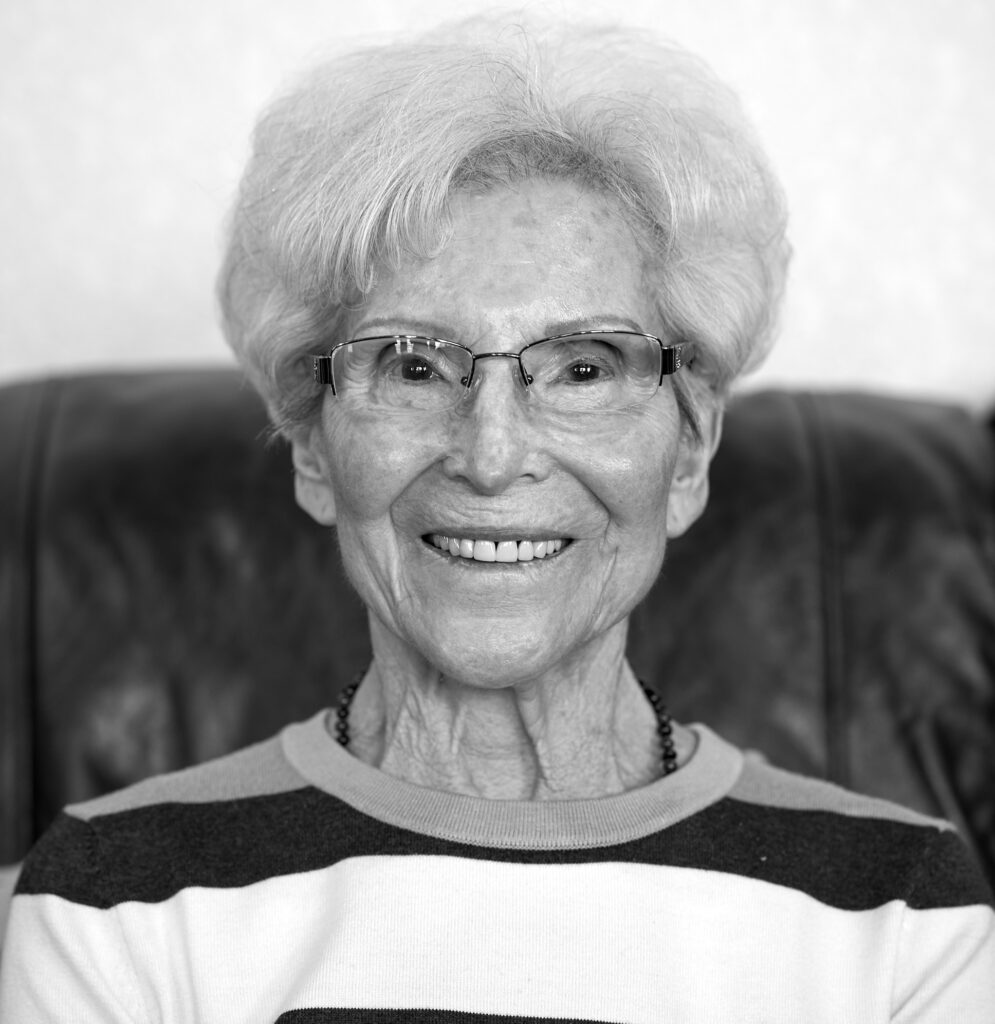
For Mom, whose kindness and love are an inspiration to everyone she meets. She is the definition of a classy lady. This book wouldn’t have been written without her. I am truly blessed to be spending time with her.

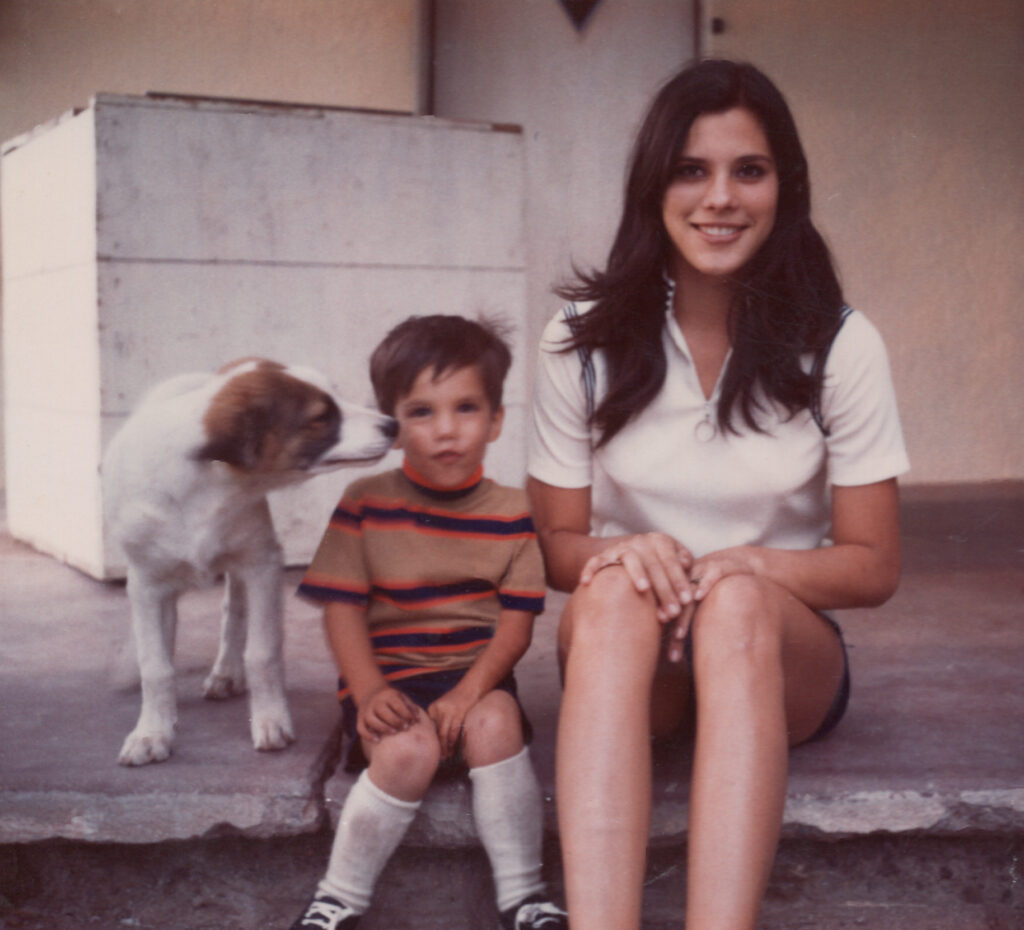
For my eldest sister Linda, who passed away from cancer complications as the final edits of this book were completed. Almost 13 years older than me, she was like a second mom in my childhood years. I miss you sis!